EFSIM

Articles & Resources

Strong Saudi Economic Fundamentals Driving Facilities Management Upside

The world is truly mesmerized by Saudi Arabia’s Giga projects, but there is much more, in essence, in the country’s growth footprint beyond these initiatives. Saudi Arabia has indeed successfully…

What FM Companies in KSA Should Do for an Impactful Saudization Strategy

Against the backdrop of the exponential growth of the facilities management industry in Saudi Arabia, the employment of Saudi nationals remains one of the most promiscuous task before facilities management…

Blog Categories

Strong Saudi Economic Fundamentals Driving Facilities Management Upside

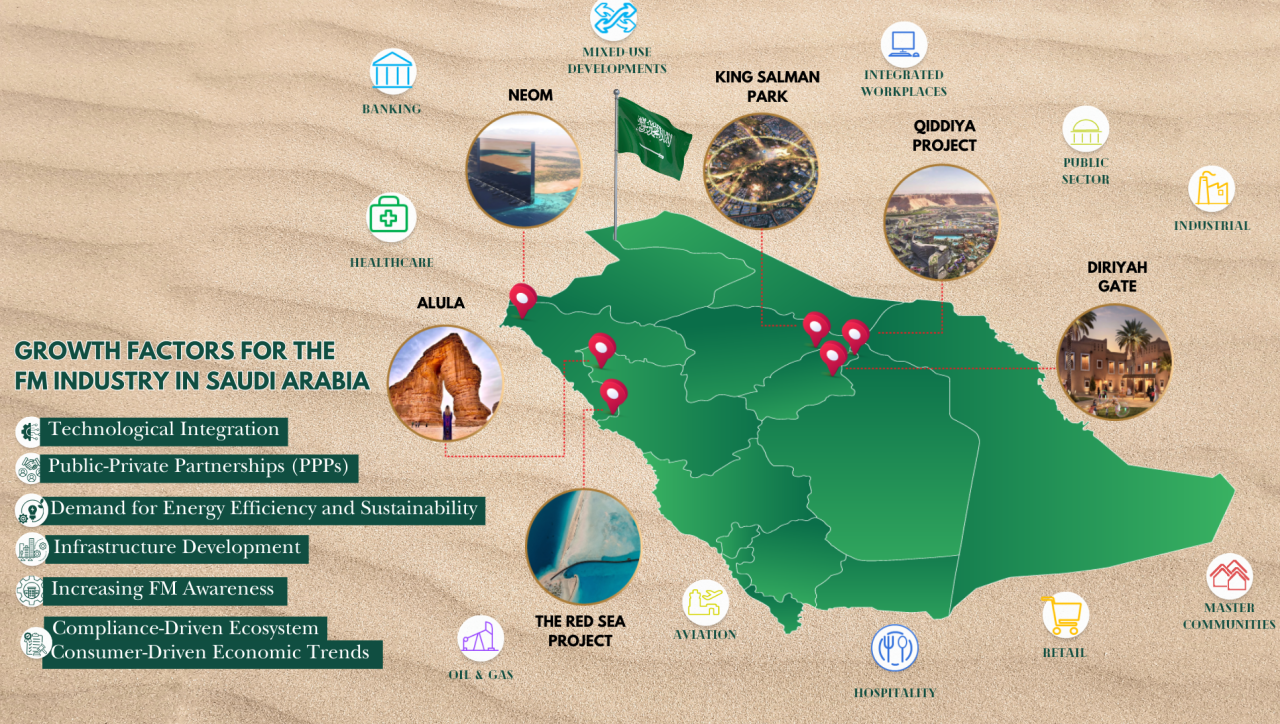
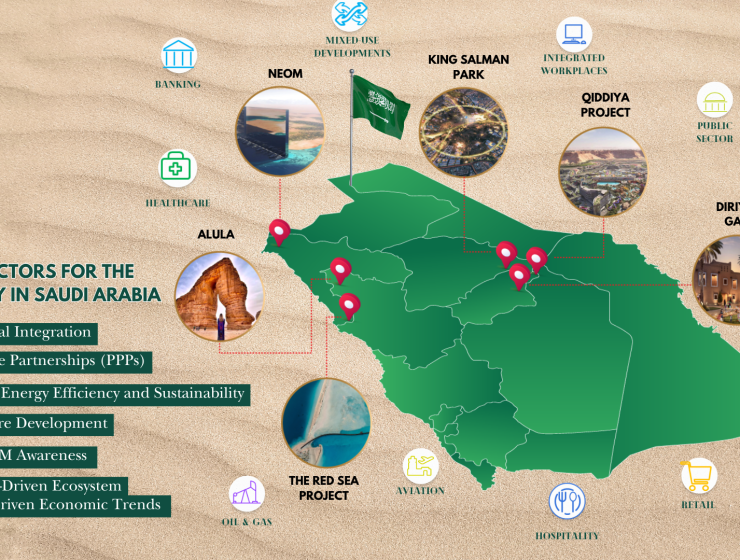
The world is truly mesmerized by Saudi Arabia’s Giga projects, but there is much more, in essence, in the country’s growth footprint beyond these initiatives. Saudi Arabia has indeed successfully adapted to the drive of economic diversity, with many sectors showing a dynamic growth trajectory. Beyond its Giga projects pipeline, the economy has diversified significantly over the years, largely due to its Economic Diversification and Vision 2030 initiatives, which have positively impacted various sectors. Saudi Arabia’s Vision 2030 aims to reduce the nation’s dependence on oil by expanding into tourism, entertainment, and technology sectors. The Kingdom’s Ministry of Finance reported that in 2024, non-oil income accounted for 40% of total government revenues, reaching approximately $134 billion—a 9.78% increase from the previous year. This strategic shift has resulted in increased investments in infrastructure and real estate, which in turn has boosted the demand for services sectors. The facility management (FM) industry in Saudi Arabia is also experiencing significant growth, driven by several key factors. 1. Infrastructure Development: The country is witnessing accelerated urbanization, with substantial investments in large-scale infrastructure projects such as NEOM, Dirriyah, Al Ula, King Salman Park, Qiddiya, and The Red Sea Project. These developments require advanced FM services involving a whole gamut of extensive services to ensure operational efficiency, sustainability, and optimal asset management. 2. Technological Integration: The Kingdom’s nationwide push for e-governance has resulted in a spectacular technological renaissance. The adoption of advanced technologies, including the Internet of Things (IoT) and Artificial Intelligence (AI), is transforming FM operations in Saudi Arabia. These technologies enable real-time monitoring, predictive maintenance, and energy management, creating increased demand. There is also a rising need for machine and tool automation, particularly robotics, in line with the innovation drive. The integration of advanced technology and the anticipated surge in demand for data centres throughout the Kingdom are expected to boost the need for operations and maintenance services for these centres. 3. Public-Private Partnerships (PPPs): The rise of PPPs in Saudi Arabia signifies a pivotal shift in infrastructure development and management. These collaborations between the government and private entities are driving the demand for FM services as a measure of governance for building asset longevity and maintenance throughout the lifecycle of projects within their PPP frameworks. 4. Demand for Energy Efficiency and Sustainability: There is a growing global emphasis on energy management and sustainability within the FM industry. Saudi, too, is pushing this agenda aligned with their COP pledges and commitments. Many Saudi entities are implementing comprehensive energy efficiency measures. The adoption of energy management programs and technologies that allow for real-time monitoring of energy usage is facilitating informed decision-making and continual improvement in energy efficiency. This focus aligns with global trends toward sustainable development and environmental, social, and governance (ESG) compliance, becoming a significant driver in the Saudi FM market. 5. Consumer-Driven Economic Trends: Sectors such as F&B, retail, education, healthcare, and technology are experiencing upward economic trends, leading to increased spending and spurring growth prospects, opening forays for FM services across malls, restaurants, hospitals and schools. There is a noticeable paradigm shift among clients moving away from conventional maintenance models in favour of Integrated Facility Management (IFM) models. 6. Increasing FM Awareness and Compliance-Driven Ecosystem: The growing awareness of FM in the Saudi market is positively influencing industry prospects. Organizations are recognizing the strategic importance of FM services in enhancing operational efficiency, reducing costs, and ensuring compliance with regulatory standards. This heightened awareness is driving greater demand for both hard and soft FM services across various sectors. In accordance with a recently published report by P&S Intelligence, Saudi Arabian FM market is projected to grow at a compound annual growth rate (CAGR) of 12.4% from 2024 to 2030, reaching USD 90.1 billion by 2030, with the organized FM industry expected to be the greatest beneficiary. Large governmental and private entities are actively seeking advanced FM solutions, realizing the growing importance of FM and its impact on compliance, quality, end-user needs, and long-term financial goals. The current buoyant supply chain activity across the Kingdom indicates an increasing demand for FM services, bolstered by the rising awareness among firms regarding corporate real estate management. This trend contributes to the growth of the property service segments with a whole bundle of services, such as workplace solutions. Furthermore, the increasing emphasis on adopting sustainable practices is also expected to impact the demand for FM services positively. In summary, the rising awareness of the benefits of facility management among Saudi organizations is a key driver of the industry’s positive outlook, leading to increased adoption of FM services and contributing to the market’s robust growth projections. Collectively, these factors are propelling the growth of the FM industry in Saudi Arabia, positioning it as a critical component of the national economic transformation and development agenda. The IFM sector has definitely evolved into a sunrise industry, with projections indicating growth rates likely to exceed 15% annually. What is glaring in this growth paradigm is that most of its growth is driven by the shift from conventional operations and maintenance (O&M) to IFM supported by brick-and-mortar sectors like infrastructure development and consumer-driven sectors such as hospitality, retail, and entertainment.

What FM Companies in KSA Should Do for an Impactful Saudization Strategy

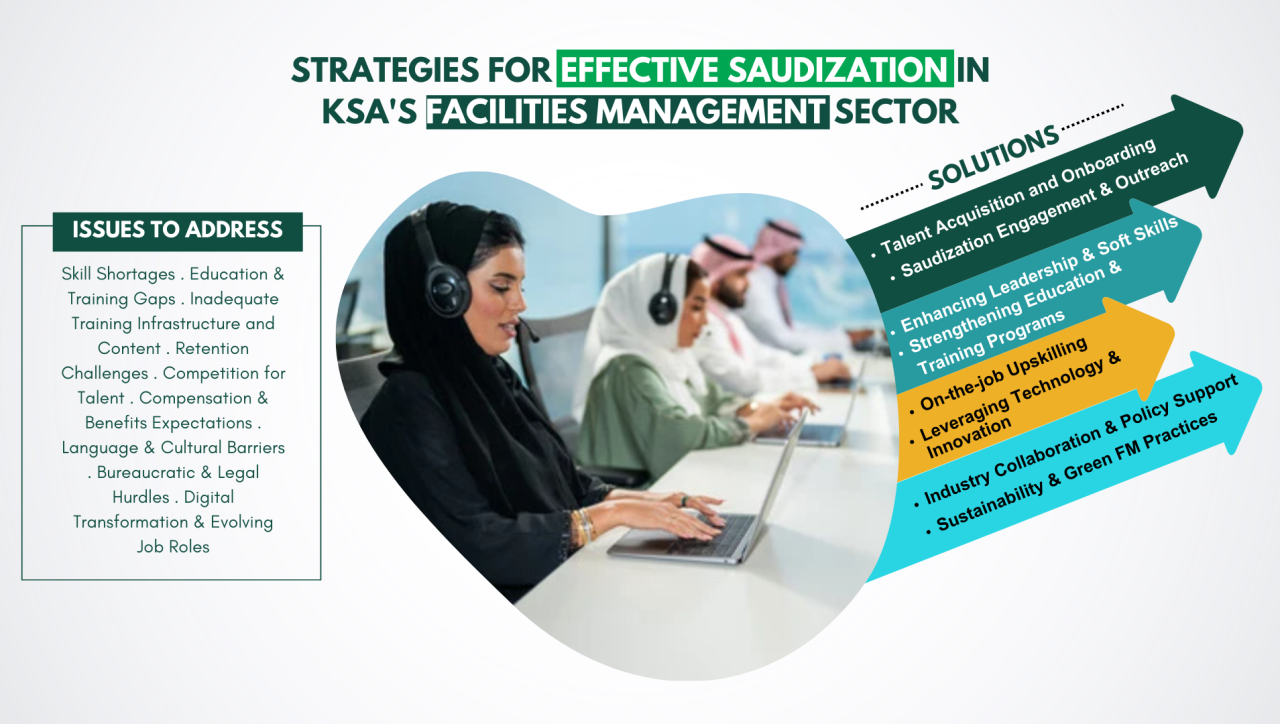
Against the backdrop of the exponential growth of the facilities management industry in Saudi Arabia, the employment of Saudi nationals remains one of the most promiscuous task before facilities management companies and their managements . There are many factors that involves their hiring and retention . The actual objective is not about numbers of hiring and the percentage to comply with regulations but it is about the retention and progression . There are various factors impacting to accomplish its desired goals . I would remind everyone that this must not be viewed as a challenge but instead, as an impeccable opportunity that offers the industry a tremendous competitive advantage and is quintessential for business success. However, it remains a herculean task across the sector, with many organisations trailing to reap its benefits. This indeed requires an innovative and explicit resolve on the part of employers. We have seen how companies with a strong track record in Saudization with future-ready Saudi nationals have benefitted from their efforts. Companies fail in Saudization and retention in their linear approach to a three-dimensional challenge by working with market conditions and lamenting the status quo. Obviously, the circumstances will not change unless FM companies take the lead with proactive involvement in the Saudization process to compete, all the while participating in Vision 2030 and anchoring their position at the forefront of those companies that matter. In the context of the facilities industry in Saudi Arabia, all stakeholders need to own a well-articulated strategy and plan. This requires strong commitment and participation of everyone involved, not just the Human Resources department; herein comes talent management on the part of FM companies would be required to go own this challenge, align with all the stakeholders on the strategy, and then take it forward. Such a strategy must embrace innovative approaches that go beyond conventional methods. Recruiting skilled technical staff in Saudi Arabia presents several challenges, influenced by various factors such as the local labour market ecosystem. Besides demand and supply, other issues complicate the fulfilment of staffing needs. I will outline the key challenges and propose a holistic approach to address them. 1. Skill Shortages – Mismatch Between Demand & Supply In Saudi Arabia, there is a significant shortage of technical skills in facilities management (FM), particularly in areas such as engineering, health & safety, hospitality, renewable energy, commissioning, and project management. The demand for qualified Saudi nationals in these fields is high, but not enough professionals are available to fill these specialised technical roles. This mismatch is primarily due to a historical lack of interest among graduates in pursuing FM careers, alongside limited university offerings in these subjects, contributing to a substantial deficit in the FM talent pool. Additionally, fewer opportunities are available at entry-level positions, such as technical supervisors, handymen, and housekeeping. As a result, the pool of skilled workers in the Saudi workforce remains limited. 2. Education & Training Gaps Although Saudi Arabia is diligently investing in education with an impetus on vocational training, many graduates still lack hands-on experience with industry-specific domains, including tools and technologies. The vocational aspect is notably lacking. The issue persists with clients demanding experience and companies lacking in-house capabilities to train graduates. 3. Competition for Talent High competition from large local and global companies, particularly in sectors such as oil and gas, IT, and engineering, makes it challenging to consider the economics. Government-backed projects and other Vision 2030 initiatives usually attract top Saudi talent, making it harder for private companies to compete. 4. Retention Challenges There are high turnover rates, particularly among skilled Saudi professionals, due to better offers from competitors or a preference to work with government entities. Companies sometimes fail to integrate Saudis, leading to retention issues, particularly when cultural adjustments are needed in an expatriate-dominated industry. Although this trend is changing as more companies embrace diversity, attracting Saudi talent remains a significant challenge. 5. Compensation & Benefits Expectations Skilled Saudi professionals expect salaries and benefits comparable to those offered by the public sector or multinational companies, which can be costly for organisations, especially SMEs. 6. Inadequate Training Infrastructure and Content Companies need to invest in upskilling local talent to reduce reliance on foreign workers. Limited availability of in-house industry-specific technical infrastructure and training programs slows workforce development, ultimately hindering talent hiring and retention. 7. Digital Transformation & Evolving Job Roles Rapid technological changes in FM require continuous reskilling, which many companies struggle to provide due to a lack of resources or in-house training capabilities. New roles in sustainability, building automation, and data science require niche expertise not widely available locally. 8. Language & Cultural Barriers Bilingual capability is often needed in technical fields, but not all local candidates are proficient. Sometimes, this can become an issue of cultural adaptation for local hires. 9. Bureaucratic & Legal Hurdles Private companies often do not fully understand compliance with Saudi labour laws, contract regulations, and employment conditions related to Saudization. This overcautiousness or lack of understanding is frequently not managed well, impacting their onboarding and engagement experience. This also has a significant impact on the retention of the Saudi workforce. Frequent changes in employment policies, such as labour reforms and Saudization quotas, require HR teams to adapt constantly. I believe most of these challenges can be mitigated through a structured plan and the implementation of specific measures highlighted below. However, this requires a collective resolve from all stakeholders involved. It must become a key performance indicator (KPI) for HR and all the organisation’s mainstream players who support this initiative. 1. Talent Acquisition and Onboarding Given the shortage of experienced professionals in the technical domain in Saudi Arabia, companies must develop a hiring strategy focused on building talent from fresh college graduates through robust training programs for freshers. Comprehensive induction processes should be combined with continual learning through on-the-job training, involving senior Saudi mentors and leaders. Therefore, colleges need innovative approaches to attract potential talent, particularly among engineering and hospitality graduates. 2. Saudization Engagement & Outreach Emphasis should